Description
overviewfb55cd020f0643f08418183279e63a5f
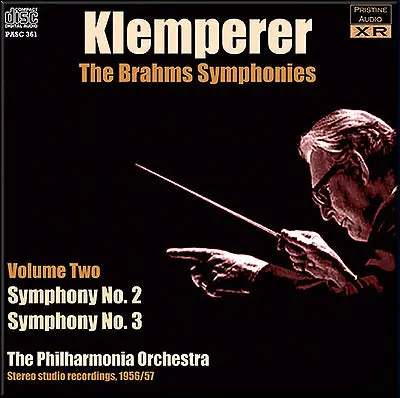
BRAHMS Symphony No. 2
BRAHMS Symphony No. 3
Recorded in 1956 and 1957
Total duration: 75:43
The Philharmonia Orchestra
conductor Otto Klemperer
578a9379d1e540bd96d26f03a79628d9review_titlefb55cd020f0643f08418183279e63a5f578a9379d1e540bd96d26f03a79628d9review_quotefb55cd020f0643f08418183279e63a5f578a9379d1e540bd96d26f03a79628d9review_bodyfb55cd020f0643f08418183279e63a5f578a9379d1e540bd96d26f03a79628d9main_samplefb55cd020f0643f08418183279e63a5fsamples/PASC361.mp3578a9379d1e540bd96d26f03a79628d9tab1_labelfb55cd020f0643f08418183279e63a5fProducer’s Note578a9379d1e540bd96d26f03a79628d9tab1_typefb55cd020f0643f08418183279e63a5fcontent578a9379d1e540bd96d26f03a79628d9tab1_contentfb55cd020f0643f08418183279e63a5f
Klemperer’s classic stereo Brahms Symphony cycle
Definitive recordings in stunning new 32-bit XR remastered transfers
The classic 1956-57 Klemperer Brahms recordings, made with the Philharmonia Orchestra by EMI in London’s Kingsway Hall, have long been regarded by many as perhaps the finest ever made. Happily the EMI engineers opted to record in stereo, at a time when far too many recordings were still being made in mono, and stereo reproduction in the home was limited to a very narrow range of open-reel tape machines.
For the day, the recordings stand up reasonably well, though as the 1977 review above demonstrates, as little as twenty years later they were showing their age, and so it’s little surprise that 55 years after the event Klemperer’s Brahms comes across as a little faded and dusty, if only in sound quality.
Happily this can now be rectified to quite stunning effect. 32-bit XR remastering has served here to bring a quality of sound unimaginable in 1957 to these recordings, shedding decades in the process, and revealing a depth, vibrancy and dynamism that previous issues simply failed to convey.
Andrew Rose
578a9379d1e540bd96d26f03a79628d9tab1_cover_thumbnail1_s3_locationfb55cd020f0643f08418183279e63a5f578a9379d1e540bd96d26f03a79628d9tab1_cover_thumbnail2_s3_locationfb55cd020f0643f08418183279e63a5f578a9379d1e540bd96d26f03a79628d9tab1_cover_download_s3_locationfb55cd020f0643f08418183279e63a5f578a9379d1e540bd96d26f03a79628d9tab1_sample1_s3_locationfb55cd020f0643f08418183279e63a5f578a9379d1e540bd96d26f03a79628d9tab1_sample2_s3_locationfb55cd020f0643f08418183279e63a5f578a9379d1e540bd96d26f03a79628d9tab1_sample3_s3_locationfb55cd020f0643f08418183279e63a5f578a9379d1e540bd96d26f03a79628d9tab1_sample4_s3_locationfb55cd020f0643f08418183279e63a5f578a9379d1e540bd96d26f03a79628d9tab1_sample5_s3_locationfb55cd020f0643f08418183279e63a5f578a9379d1e540bd96d26f03a79628d9tab1_sample6_s3_locationfb55cd020f0643f08418183279e63a5f578a9379d1e540bd96d26f03a79628d9tab2_labelfb55cd020f0643f08418183279e63a5fFull Track Listing578a9379d1e540bd96d26f03a79628d9tab2_typefb55cd020f0643f08418183279e63a5ftrack_listing578a9379d1e540bd96d26f03a79628d9tab2_contentfb55cd020f0643f08418183279e63a5f
- BRAHMS Symphony No. 2 in D major, Op. 73
Recorded 29, 30 October 1956 - BRAHMS Symphony No. 3 in F major, Op.90
Recorded 26, 27 March 1957
Recorded Kingsway Hall, London
Transferred from HMV box set SLS 804
The Philharmonia Orchestra
Otto Klemperer conductor
XR remastering by Andrew Rose at Pristine Audio, October 2012
Cover artwork based on a photograph of Otto Klemperer
Total duration: 75:43
578a9379d1e540bd96d26f03a79628d9tab2_cover_thumbnail1_s3_locationfb55cd020f0643f08418183279e63a5f578a9379d1e540bd96d26f03a79628d9tab2_cover_thumbnail2_s3_locationfb55cd020f0643f08418183279e63a5f578a9379d1e540bd96d26f03a79628d9tab2_cover_download_s3_locationfb55cd020f0643f08418183279e63a5f578a9379d1e540bd96d26f03a79628d9tab2_sample1_s3_locationfb55cd020f0643f08418183279e63a5f578a9379d1e540bd96d26f03a79628d9tab2_sample2_s3_locationfb55cd020f0643f08418183279e63a5f578a9379d1e540bd96d26f03a79628d9tab2_sample3_s3_locationfb55cd020f0643f08418183279e63a5f578a9379d1e540bd96d26f03a79628d9tab2_sample4_s3_locationfb55cd020f0643f08418183279e63a5f578a9379d1e540bd96d26f03a79628d9tab2_sample5_s3_locationfb55cd020f0643f08418183279e63a5f578a9379d1e540bd96d26f03a79628d9tab2_sample6_s3_locationfb55cd020f0643f08418183279e63a5f578a9379d1e540bd96d26f03a79628d9tab3_labelfb55cd020f0643f08418183279e63a5fCover Art578a9379d1e540bd96d26f03a79628d9tab3_typefb55cd020f0643f08418183279e63a5fcover_art578a9379d1e540bd96d26f03a79628d9tab3_contentfb55cd020f0643f08418183279e63a5f578a9379d1e540bd96d26f03a79628d9tab3_cover_thumbnail1_s3_locationfb55cd020f0643f08418183279e63a5fcovers/thumbs/PASC361.jpg578a9379d1e540bd96d26f03a79628d9tab3_cover_thumbnail2_s3_locationfb55cd020f0643f08418183279e63a5f578a9379d1e540bd96d26f03a79628d9tab3_cover_download_s3_locationfb55cd020f0643f08418183279e63a5fcovers/PASC361.pdf578a9379d1e540bd96d26f03a79628d9tab3_sample1_s3_locationfb55cd020f0643f08418183279e63a5f578a9379d1e540bd96d26f03a79628d9tab3_sample2_s3_locationfb55cd020f0643f08418183279e63a5f578a9379d1e540bd96d26f03a79628d9tab3_sample3_s3_locationfb55cd020f0643f08418183279e63a5f578a9379d1e540bd96d26f03a79628d9tab3_sample4_s3_locationfb55cd020f0643f08418183279e63a5f578a9379d1e540bd96d26f03a79628d9tab3_sample5_s3_locationfb55cd020f0643f08418183279e63a5f578a9379d1e540bd96d26f03a79628d9tab3_sample6_s3_locationfb55cd020f0643f08418183279e63a5f578a9379d1e540bd96d26f03a79628d9tab4_labelfb55cd020f0643f08418183279e63a5fHistoric Review578a9379d1e540bd96d26f03a79628d9tab4_typefb55cd020f0643f08418183279e63a5fcontent578a9379d1e540bd96d26f03a79628d9tab4_contentfb55cd020f0643f08418183279e63a5f
REVIEW Symphony No. 2 (1977 reissue)
I heard this shortly after listening to the RCA/Reiner recording of Brahms No. 4 (reviewed last month—GL1 1961), both of the same vintage, and could not help but be struck by the difference of sound. Both are good—but both very different. The RCA is brighter and more vivid: the HMV had neither of those characteristics, even when it was first issued. Yet it is satisfactory enough to convey Klemperer’s superb performance, which is what matters. Klemperer always liked his woodwind well forward and if you played this to someone who didn’t know what he was listening to and started at the third movement, he might think it a piece for woodwind ensemble, so forward is their sound, though the string pizzicato bass is perfectly clearly balanced.
But it is the performance that matters. Klemperer’s perception of the architecture of a movement, of where to increase and when to relax the tension, makes this symphony seem stronger that it is often allowed to be, yet there is no lack of lyricism. It is a pleasure to have these great performances (for that of the Tragic Overture is tremendously powerful) available again—and at a reduced price.
T. H., The Gramophone, August 1977
578a9379d1e540bd96d26f03a79628d9tab4_cover_thumbnail1_s3_locationfb55cd020f0643f08418183279e63a5f578a9379d1e540bd96d26f03a79628d9tab4_cover_thumbnail2_s3_locationfb55cd020f0643f08418183279e63a5f578a9379d1e540bd96d26f03a79628d9tab4_cover_download_s3_locationfb55cd020f0643f08418183279e63a5f578a9379d1e540bd96d26f03a79628d9tab4_sample1_s3_locationfb55cd020f0643f08418183279e63a5f578a9379d1e540bd96d26f03a79628d9tab4_sample2_s3_locationfb55cd020f0643f08418183279e63a5f578a9379d1e540bd96d26f03a79628d9tab4_sample3_s3_locationfb55cd020f0643f08418183279e63a5f578a9379d1e540bd96d26f03a79628d9tab4_sample4_s3_locationfb55cd020f0643f08418183279e63a5f578a9379d1e540bd96d26f03a79628d9tab4_sample5_s3_locationfb55cd020f0643f08418183279e63a5f578a9379d1e540bd96d26f03a79628d9tab4_sample6_s3_locationfb55cd020f0643f08418183279e63a5f
Explore more from our collection.



Reviews
There are no reviews yet.